How Cuban cigars age, and when a box is ready
There's no fixed rule, and Habanos says so. Here's what the sources agree on, where they don't, and a practical way to decide for your own boxes.
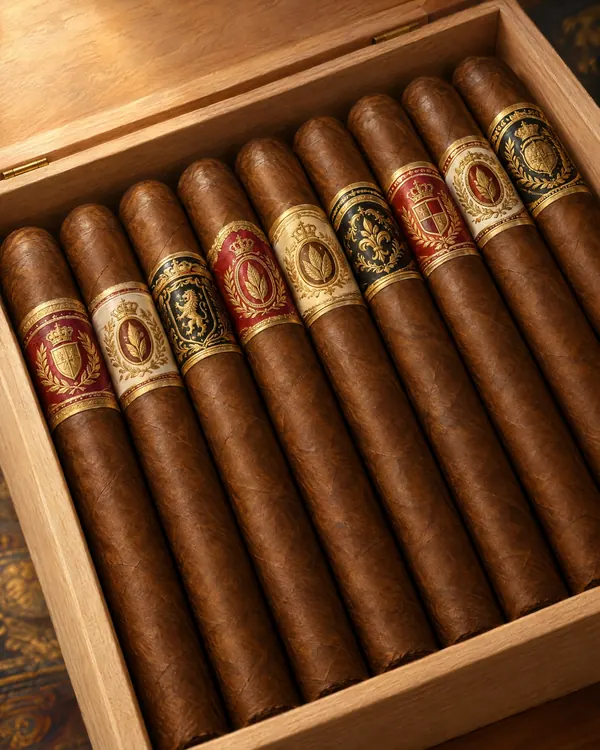
A box of Habanos isn't finished when it leaves the factory. Over months and years the flavours settle, harshness softens and, in the right box, new depth appears. How long that takes, and how long it lasts, is one of the most argued-over questions among collectors. Habanos itself says the longest useful period "attracts conflicting opinions."
Start from the box date
Age is counted from the date stamped on the box: the month and year it was packed, such as ABR 19 for April 2019. It's not the harvest or rolling date; the leaf is aged before rolling. Since 2000 the date has been written plainly as a Spanish month and two-digit year; earlier boxes used letter codes. Our guide to box codes explains how to read them.
What Habanos says
- Boxed Habanos benefit from time, but there's no fixed rule.
- Some people think about five years is enough for the benefits to show; others want at least ten years from boxing.
- English custom has been to rest cigars for at least two years before smoking them, and from 2008 the UK distributor offered "Aged Habanos" of at least ten years.
- Store them at 16–18°C and 65–70% relative humidity, somewhere well ventilated so off-odours can disperse.
How the stages are usually described
Collectors and writers describe ageing in broad stages. The figures below are attributed, and they're rules of thumb, not measurements.
| Stage | Roughly when | What's said to happen | Source |
|---|---|---|---|
| Fresh | First months | Ammonia from fermentation fades: most of it in a few months, nearly all by the end of the first or second year (Min Ron Nee) | Cigar Journal |
| Early changes | 6–12 months | The first noticeable rounding | Simply Cigars |
| Settling | 2–3 years | Medium and full cigars smooth out | Simply Cigars |
| First maturity | 2–3 years (mild) to 10–15 years (strong, in cabinets) | The blend comes together | Cigar Journal |
| "Sweet spot" | Around 5 years | Described by one UK merchant as a real sweet spot | Simply Cigars |
| Peak for many | Around 10 years | "Peak maturity for most Havanas", then a plateau | Simply Cigars |
| Second maturity | 15 years and more | For the cigars that keep improving; finesse after 20 years, in Min Ron Nee's view | Cigar Journal |
| Decline | After about 20 years for most | Cigars turn thin and perfumed | Cigar Journal; Cigar Aficionado |
The "sick period"
Some collectors talk of a dormant or "sick" phase, a while after boxing, when young cigars are said to taste flat or harsh until they come round again. Estimates run from six months to several years. Habanos doesn't describe one, Cigar Aficionado doesn't define one, and on collector forums plenty of experienced smokers say they've never noticed it. It's best treated as folklore: if a young box disappoints, rest it and try another in six months rather than assuming a timetable.
What ages longest
Cigar Aficionado's editors put it simply: thick cigars age better than thin ones such as coronas and lonsdales, because they're rolled with more leaves, and the blend is the key factor. Cigar Journal links longer ageing to strength and tannin. In practice:
- Fuller blends generally have more to give over time than mild ones.
- Bigger ring gauges tend to age more slowly and for longer.
- Mild, thin cigars can be at their best much sooner, and can fade sooner too.
- Full boxes are generally thought to mature better than loose singles.
Opinions differ even among experts. In one Cigar Aficionado tasting in Havana, an aged box scored lower than a current release of the same cigar; a Cuban specialist's answer was that the aged one needed another ten years.
Cigars aged before they're rolled
Some Habanos releases are aged in the leaf, which is different from ageing in your humidor:
- Reserva: filler, binder and wrapper all aged for at least three years before rolling.
- Gran Reserva: all leaves aged for at least five years.
- Edición Limitada: wrappers aged for at least two years.
- Añejados: finished cigars aged in Cuba for at least five years after rolling, before release.
Storing boxes for ageing
- Stable conditions matter more than exact numbers. Habanos recommends 16–18°C and 65–70% humidity; some long-term collectors go a little drier and cooler. See humidity and temperature.
- Keep boxes together. Habanos says boxed cigars benefit from time, and a full box is generally thought to age better than loose singles. Airtight containers such as tupperdors are a common way to rest boxes for years.
- Keep it cool. Warmth speeds changes you don't want, and above about 21°C tobacco beetles become a risk.
- Leave them alone, apart from tasting.
Deciding when a box is ready
Cigar Aficionado's advice is the most practical one: test, don't follow a calendar. A simple routine:
- Record the box date when it arrives.
- Smoke one early, and write down what you thought, with the box's age.
- Try another every six to twelve months and compare your notes.
- When the notes stop getting better, that's your box's window. Smoke the rest while it lasts.
Your own notes on the same box over the years are worth more than any rule of thumb.
Sources
- Habanos S.A.: ageing boxed Habanos; Ageing Habanos; Añejados
- Cigar Journal: Stages of cigar ageing
- Cigar Aficionado: When is it time to stop ageing a cigar? and The age equation
- Simply Cigars: How to age cigars
- Friends of Habanos forum: the sick period
Questions collectors ask
How long should you age Cuban cigars?
There's no fixed rule. Habanos notes that some people find about five years enough to show the benefits and others want at least ten. UK custom has long been at least two years, and aged stock released in the UK has been ten years or more.
What is the cigar 'sick period'?
A phase some collectors describe, months to a few years after boxing, when young cigars are said to taste flat or harsh. Habanos doesn't define one and collectors disagree about whether it exists, so treat it as folklore and taste for yourself.
Is a Cuban box date the date the cigars were rolled?
It's the month and year the box was packed. The tobacco itself was aged before rolling. Collectors count a box's age from that packing date.
Do all Cuban cigars improve with age?
Not equally. Fuller blends and thicker cigars are generally said to age better and for longer than mild, thin ones. Most sources agree that cigars eventually fade, turning thin after a couple of decades or more.